
RAL - Rotorcraft Aerodynamic Lab
RAL - Rotorcraft Aerodynamic Lab

Rotorcraft Aerodynamics Lab (RAL) at the Department of Aerospace Science and Technology (DAER) of Politecnico di Milano is dedicated to advanced research in the aerodynamics and aeroacoustics of helicopters, tiltrotors, and novel electric Vertical Take-Off and Landing (eVTOL) aircraft. Combining high- and mid-fidelity numerical simulations with extensive experimental test campaigns, RAL contributes to the development of quieter, safer, and more efficient next-generation rotorcraft and Advanced Air Mobility (AAM) systems.
ONGOING ACTIVITIES
The laboratory continuously develops and enhances a comprehensive suite of computational tools spanning different fidelity levels. The in-house Chimera-based Navier-Stokes solver ROSITA incorporates advanced vorticity confinement approaches to improve aerodynamic and aeroacoustic predictions in vortex-dominated flows, with a specific focus on Blade-Vortex Interaction phenomena in helicopter rotors. Noise propagation is evaluated using FFW-H formulations based on retarded time or emission surface approaches.
In parallel, the open-source SU2 code was extended at DAER for rotor performance prediction in hover and forward flight. The core of the code is the set of U-RANS equations, which are solved to determine the flow. Hover simulations can be performed using a rotating reference frame. A multizone approach is used to simulate the interaction between rotors/propellers, with rotating regions communicating through sliding interfaces where a weighted interpolation is needed. The farfield propagation of the tonal noise is computed with a permeable surface FWH formulation implemented with a modular CFD-CAA style. The formulation is used to study the acoustic interaction between propellers in forward flight and hover with different relative positions. SU2 can also compute the quadrupole source using a synthetic turbulence strategy called Stochastic noise generation (SNG). A multidisciplinary adjoint solver based on algorithmic differentiation is implemented for the coupled RANS-FWH. This framework adopts a steady optimization chain even if the noise emission is intrinsically unsteady. The obtained sensitivity is used to modify the shape of blade propellers to obtain a new local minimum with lower SPL without losing aerodynamic performance.
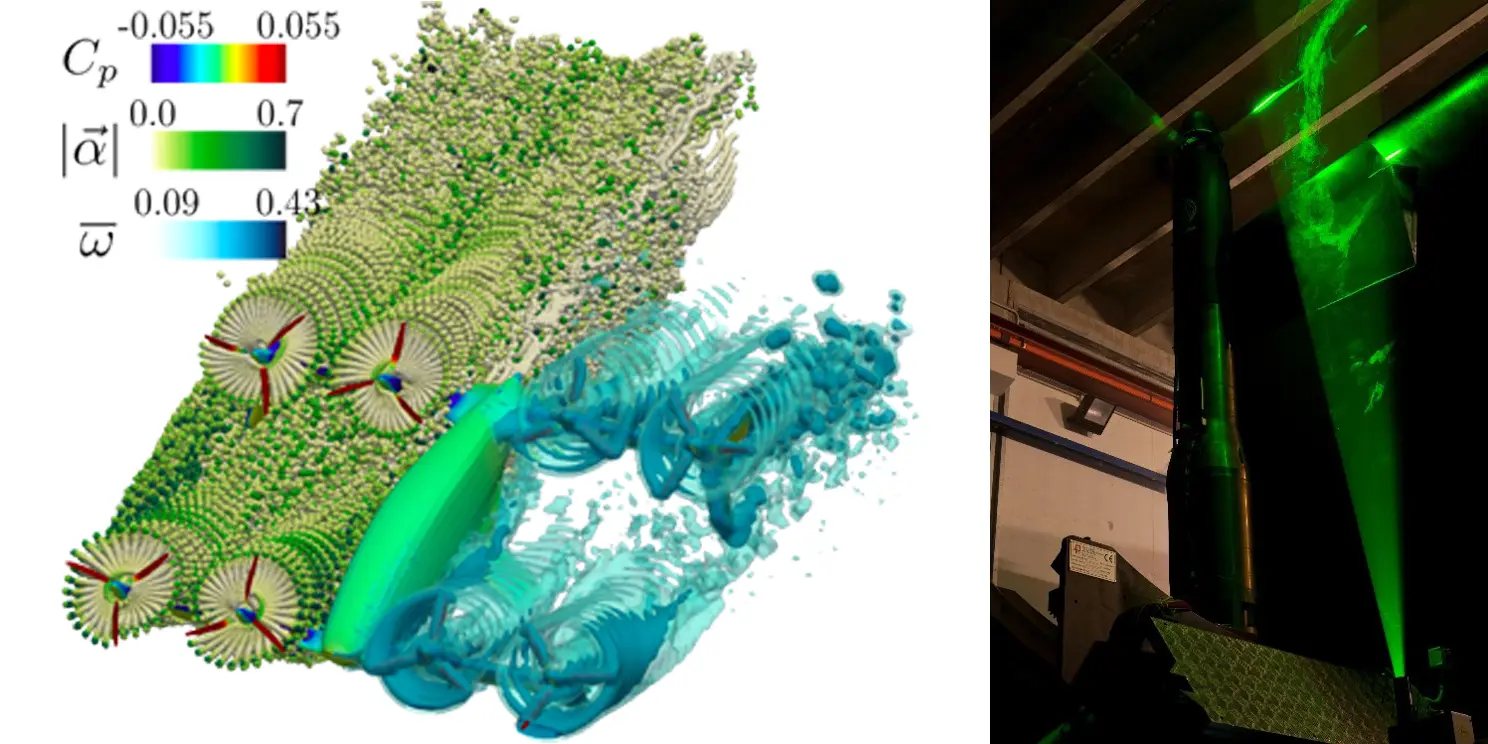
To address complex rotorcraft architectures efficiently, RAL heavily relies on DUST (www.dust.polimi.it), an open-source mid-fidelity aerodynamic code based on the Vortex Particle Method, originally developed in collaboration with Airbus. DUST is coupled with the multibody software MBDyn to perform comprehensive aeroelastic simulations of complex rotorcraft and eVTOL configurations, enabling the detailed characterization of interactional aerodynamics and vehicle stability. Furthermore, DUST is coupled with the same FWH acoustic solver framework implemented for SU2, providing a unified and consistent multi-fidelity aeroacoustic prediction suite.
The experimental activities focus on the interactional aerodynamics and aeroacoustics of multi-rotor systems through dedicated wind tunnel campaigns. A custom experimental test rig equipped with multi-component strain gauge balances was designed to investigate propeller-propeller and wing-propeller interactions in the "S. De Ponte" wind tunnel of the Aerodynamics laboratory at DAER. These campaigns generate comprehensive databases, including Stereoscopic PIV surveys and unsteady pressure measurements, which serve to validate multi-fidelity numerical tools. The setup is also used to characterize the aeroacoustic footprint of tandem propellers reproducing typical hover and transition conditions of eVTOL aircraft.
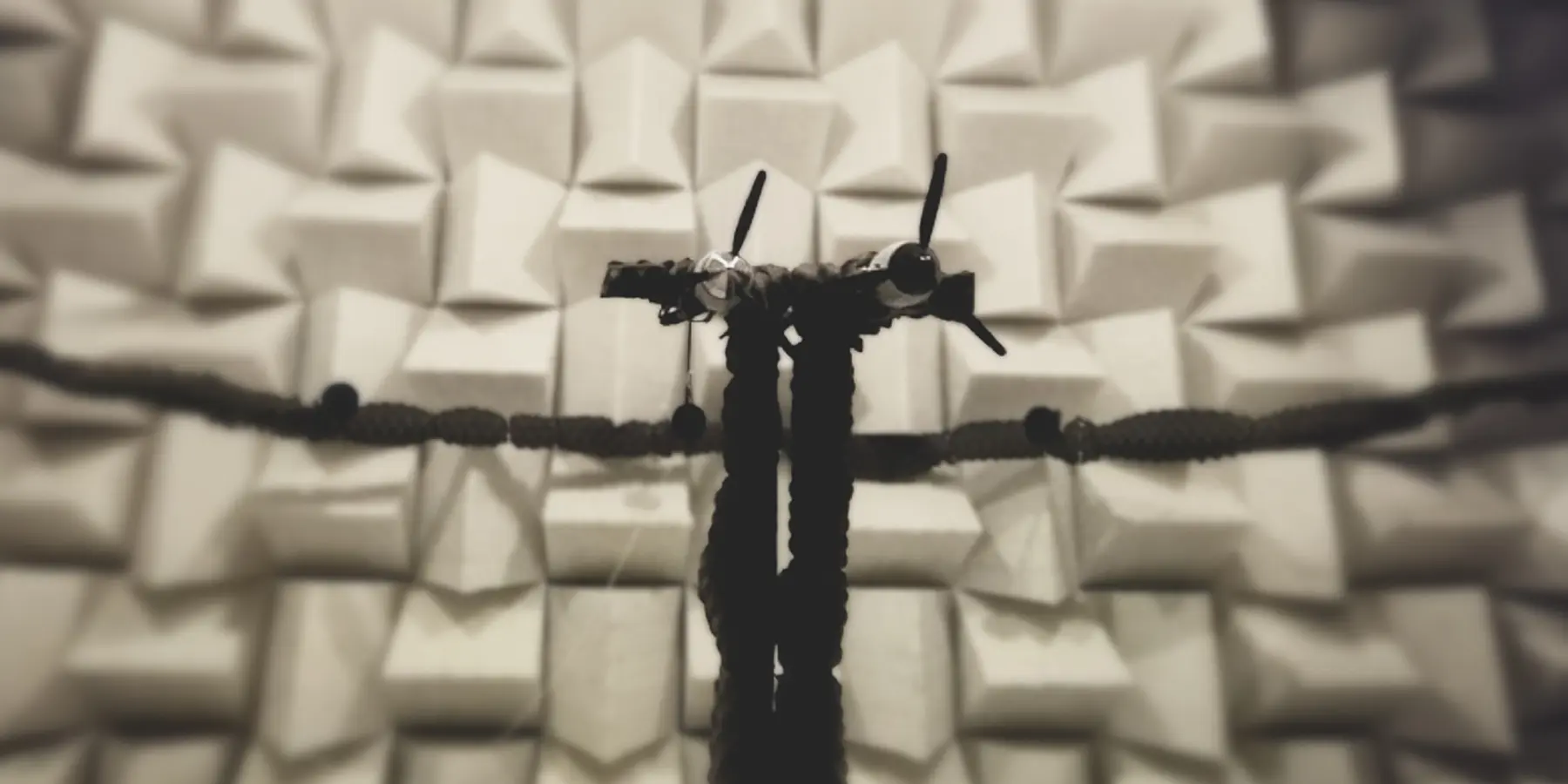
A major recent focus of the experimental activity involves the NASA CRM quadrotor. Extensive acoustic test campaigns have been conducted in anechoic wind tunnel facility of DAER to characterize its noise emissions, alongside dynamic measurement campaigns performed using a Steward platform aimed at evaluating aerodynamic stability derivatives set.
On a larger scale, full compound helicopter configurations comprising a main rotor and auxiliary propellers have been extensively tested in the GVPM large wind tunnel of Politecnico di Milano within the framework of European research initiatives such as GARTEUR. Moreover, the availability of a whirl tower in the GVPM enabled to test full-scale eVTOL propellers from hover to cruise flight conditions reproducing the transition maneuver. From a fundamental perspective, the group conducts research on two-dimensional parallel Blade-Vortex Interaction and dynamic stall phenomena using twin-airfoil wind tunnel setups combined with high-fidelity Large Eddy Simulations using the compressible DG solver FEMilaro.
FUTURE PLANS
Ongoing computational developments focus on coupling the CFD code ROSITA with the updated reformulated Vortex Particle Method (rVPM) implemented in DUST. Tightly coupled with the near-field Navier-Stokes solver, this approach aims to enhance wake resolution and significantly improve the modeling of complex phenomena, such as rotorcraft-obstacle interactions in urban environments, as well as broadband noise predictions.
Research within the international frameworks and ongoing wind tunnel activities is tightly focused on the aerodynamic and aeroacoustic characterization of multi-rotor eVTOL configurations. A primary effort centers on the newly launched GARTEUR AG28 activity dedicated to the Vortex Ring State (VRS) in multi-rotor eVTOLs, aiming to clarify the onset mechanisms, aerodynamic interactions, and operational boundaries during steep descent maneuvers. These investigations also incorporate the study of acoustic signatures for early detection and identification of VRS conditions. The ultimate goal of these collaborative experimental and numerical efforts is to generate a comprehensive, unique benchmark database that will serve for the validation of both mid- and high-fidelity aerodynamic and aeroacoustic codes across international research institutions.
ERC KEYWORDS
- PE6_12 Scientific computing, simulation and modelling
- PE8_1 Aerospace Engineering
- PE8_4 Computational Engineering
- PE_5 Fluid Mechanics
FREE KEYWORDS
- Rotary-wing aircraft
- Wind tunnel testing
- eVTOL
- Advanced Air Mobility
Progetti di ricerca
DUST
Scopri di piùGARTEUR | Action Group RC/AG-26 - Noise Radiation and Propagation for Multirotor System Configurations
Scopri di piùCleanSky | ROD (Rotorcraft Drag reduction)
Scopri di piùCleanSky | GUM (active GUrney on Main rotor blades)
Scopri di piùCleanSky | TETRA (TEst of Tilt-Rotor Air intakes)
Scopri di più6TH FP EUROPEAN RESEARCH PROJECT | NICETRIP - Novel Innovative Competitive Effective Tilt Rotor Integrated Project
Scopri di più
Articoli del magazine
13/03/2026
PROF. ALEX ZANOTTI ACTIVITY SELECTED BY AEROACOUSTICS SPECIALISTS’ COMMITTEE (ASC) OF THE COUNCIL OF EUROPEAN AEROSPACE SOCIETIES (CEAS) ON 2024 HIGHLIGHTS REPORT
16/06/2025
DR. JING YEN COST AWARENESS SCHOLARSHIP FOR INTEREST AND IMPROVEMENT IN AFFORDABILITY OR ROTORCRAFT

10/06/2025
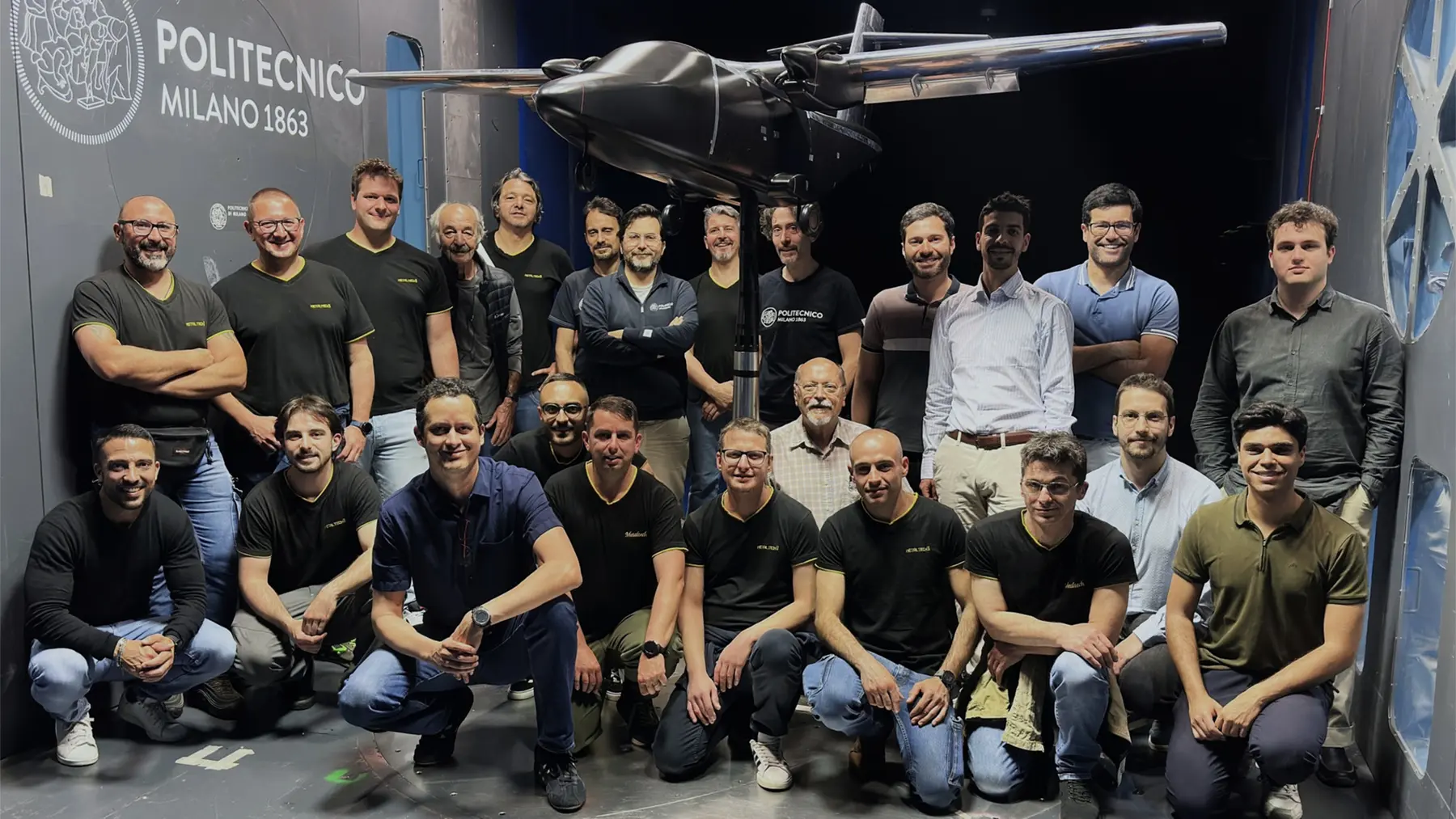
WIND TUNNEL TESTS ON LUS - 222 AIRCRAFT
03/06/2025
SAFE, LOW-NOISE OPERATIONS OF UAM IN URBAN CANYONS VIA INTEGRATION OF GUST OUTCOMES AND TRIM OPTIMIZATION

21/02/2024
NEW DUST WEBSITE

18/10/2023
Il GRUPPO GARTEUR FESTEGGIA 50 ANNI!

20/12/2022
1st DUST WORKSHOP
